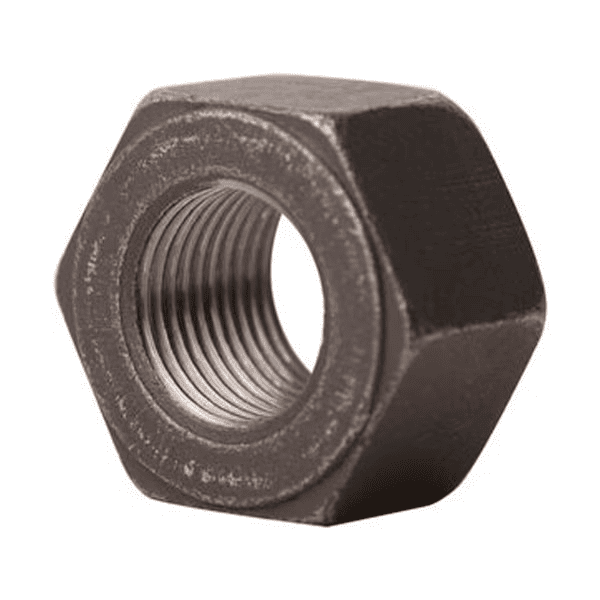
Heavy Hex Nut
Heavy hex nuts are thicker and larger than standard hex nuts, providing greater strength, higher load-bearing capacity, and improved torque resistance. They are designed for high-stress applications such as pressure vessels, structural connections, and industrial machinery. Their extra thickness ensures more thread engagement and better resistance to fatigue in demanding environments.
Key Features
- Thicker and wider than standard hex nuts for higher strength
- Provides enhanced load distribution and torque resistance
- Suitable for high-stress, heavy-duty, and industrial applications
- Compatible with high-strength bolts and studs
Material & Standards
- Carbon Steel: ASTM A563 Grade A/B/10S – General industrial use
- Alloy Steel: ASTM A194 Grades 2H, 8, 8M, 8T, 8H – High-strength applications
- Stainless Steel: AISI 304 / 316 (ASTM A194 8 / 8M) – Corrosion-resistant applications
- Nickel Alloys / Inconel: Extreme environments
Standards
- ASME B18.2.2 – Heavy hex nuts (inch series)
- ISO 4033 / DIN 934 – Heavy hex nut (metric series)
- ASTM A563 / ASTM A194 – Material and mechanical requirements
Material Grades (Commonly Used)
High Tensile, Stainless Steel, Alloy Steel, Inconel, Incoloy, Hastelloy, Monel, Silicon Bronze, Phosphor Bronze, Aluminium Bronze, Nickel, Brass, Copper, Copper Nickel,Duplex, Super Duplex, Titanium Alloys, CB20, Nitronic, Nimonic, ASME, ASTM et…
Technical Specifications
- Diameter Range: M3 to M160 / 8” to 6
- Thread Type: UNC / UNF / Metric (coarse & fine)
- Height / Width Across Flat: Thicker and wider than standard hex nuts to increase strength
Surface Protection / Coating:
- PTFE Coated (Blue, Yellow, Red, Green & Black)
- Hot Dip Galvanized
- Yellow Zinc Plated or Cadmium Plated
- Blue Zinc Plated
- Molykote
- Aluminium Zinc Flake Coated
- Black Phosphate
- Zinc Plated
- Nickel Plated
Engineering Applications
- Pressure vessels, flanges, and valves
- Structural steel assemblies and heavy machinery
- Oil & Gas, petrochemical, and offshore installations
- Bridges, pipelines, and industrial equipmentt
Performance & Key Features
- Higher load-bearing and torque resistance compared to standard hex nuts
- Greater thread engagement for fatigue resistance in heavy-duty applications
- Suitable for critical assemblies requiring high-strength fastening
- Compatible with lock washers or prevailing torque nuts for vibration resistance
Design Considerations
- Match nut grade with bolt grade for optimal strength
- Apply correct torque to prevent over-tightening or thread stripping
- Use washers where load distribution is required
- Select material and coating based on environmental and mechanical conditions