Socket Head Cap Screw (Allen Bolt)
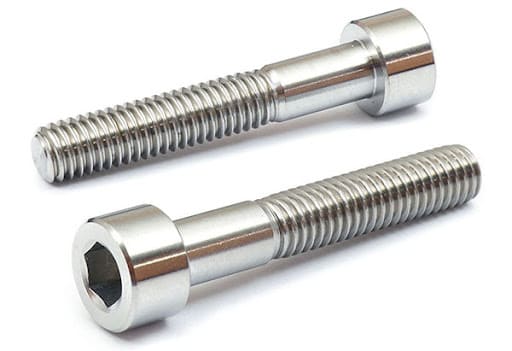
Socket Head Cap Screws (SHCS), commonly known as Allen bolts, are high-strength threaded fasteners featuring a cylindrical head with an internal hexagonal drive. They are designed for applications requiring high tensile strength, precise clamping force, and installation in confined spaces where external wrench access is limited.
These fasteners are widely used in precision assemblies and critical applications due to their ability to achieve higher preload compared to conventional hex bolts.
Applicable Standards
Dimensional Standards:
- ASME B18.3 – Socket Head Cap Screws (Inch Series)
- ISO 4762 / DIN 912 – Metric Socket Head Cap Screws
Material Standards:
- ASTM A574 – Alloy steel (high strength)
- ASTM A193 (B7, B8, B8M – for high temp/corrosion applications)
- ISO 898-1 – Mechanical properties (Metric)
Material Grades (Commonly Used)
High Tensile, Stainless Steel, Alloy Steel, Inconel, Incoloy, Hastelloy, Monel, Silicon Bronze, Phosphor Bronze, Aluminium Bronze, Nickel, Brass, Copper, Copper Nickel,Duplex, Super Duplex, Titanium Alloys, CB20, Nitronic, Nimonic, ASME, ASTM etc……
Typical Specifications
- Size Range : M3 to M64 / #0 to 2”
- Thread Type: UNC / UNF / Metric (Coarse & Fine)
- Head Type: Cylindrical head with internal hex socket
- Drive Type:Hex key (Allen key)
- Strength Class: Metric: 8.8, 10.9, 12.9 ,Inch: ASTM A574 (high strength)
Surface Protection / Coating:
- PTFE Coated (Blue, Yellow, Red, Green & Black)
- Hot Dip Galvanized
- Yellow Zinc Plated or Cadmium Plated
- Blue Zinc Plated
- Molykote
- Aluminium Zinc Flake Coated
- Black Phosphate
- Zinc Plated
- Nickel Plated
Manufacturing & Processing
- Precision cold forging or machinings
- Thread rolling for improved fatigue strength
- Heat treatment (quenched & tempered) for high-strength grades
- Surface finishing as per application requirements
Performance Characteristics
- High tensile and fatigue strength
- Ability to achieve high preload with smaller head size
- Ideal for limited space installations
- Clean and flush appearance in assemblies
- Excellent performance under dynamic and cyclic loading
Key Design Considerations
- Proper hex key engagement to avoid stripping
- Torque control for achieving correct preload
- Surface finish selection based on environment
- Avoidance of over-tightening in high-strength grades (brittle risk)
- Compatibility with mating materials (to prevent galling in stainless steel)